

Pore vs pour is fought over a single word: over. Millions of sentences a year send someone over a document, and half the internet reaches for the wrong spelling, because the two verbs sound identical and only one of them is familiar.
The pair sorts with one question: what is moving? If attention is moving across pages, the word is pore. If something is flowing, the word is pour. If nothing is moving because the word names a tiny opening, the word is pore again.
That question is the whole system, and this page will run everything through it: the attention verb, the opening noun, the flow families, and the famous collision where pour over is also correct, for coffee, salads, and ice.
Pore vs Pour at a Glance
|
Sense |
Word |
What is moving |
Example |
|---|---|---|---|
|
Study closely |
pore (verb) |
Attention |
She pored over the report |
|
Tiny opening |
pore (noun) |
Nothing; it is a passage |
Clogged pores, pore space |
|
Liquid flows |
pour (verb) |
Liquid in a stream |
Pour the water over the ice |
|
Things flow like liquid |
pour (verb) |
Crowds, money, light, complaints |
Fans poured into the stadium |
|
The coffee method |
pour-over (noun, adjective) |
Water over grounds |
A pour-over at the cafe |
Read the table as a traffic report. Attention travels on pore. Streams travel on pour. Openings sit still as pore.
Merriam-Webster’s usage guide to pore over and pour over states the ruling behind the first row with unusual bluntness: using pour over for the reading sense is the most common mistake among these words.
The fourth row needs its own warning, and it gets one below. Pour’s figurative family is correct English, and writers who learn only half the lesson start breaking it. The moving test protects both directions of the error.
The Moving Test: Three Questions, Three Seconds
Step 1: Is attention moving? If eyes and mind are traveling slowly across something (a report, a map, evidence, a menu), the word is pore. Pore over it, pore through it, pored, poring: the attention family in every tense.
Step 2: Is something flowing? If a stream is moving, liquid or anything behaving like liquid, the word is pour. Water, rain, batter, crowds, money, complaints: if it streams, it pours.
Step 3: Is it an opening? If the word names a tiny hole or passage in a surface (skin, leaf, rock), the word is pore, the noun. Openings do not move; they are what things move through.
Step 4: Check the object after over. Pages, files, and data take pore over. Surfaces receiving liquid (ice, salad, grounds, cereal) take pour over. The object usually settles the phrase before you reach the verb’s meaning.
Run the steps and notice their order. Attention first, because the studying phrase is where the famous error lives. Flow second, because it guards the overcorrection. Opening third, because the noun never competes with either verb once it is recognized.
Pore the Verb: Attention at Work
Merriam-Webster’s entry gives the verb pore three shades of one act: to gaze intently, to read or study attentively (usually used with over), and to reflect or meditate steadily.
Strip the wording down and the core is sustained close attention, eyes down, mind on the material.
The verb lives almost entirely inside two phrases. Pore over examines a surface: pore over the contract, pore over the photographs, pore over the fine print.
Pore through works through a volume: pore through the archives, pore through the records, page by page until the pile gives up its answer.
The objects tell the story of the verb’s working life. Detectives pore over evidence. Analysts pore over spreadsheets. Lawyers pore over contracts. Scholars pore over archives, genealogists over census records, editors over manuscripts.
Wherever a profession reads slowly for a living, this verb is on the desk.
YourDictionary’s pore vs pour explainer explains why the error feels so reasonable: readers who meet pour over for studying picture knowledge flowing over the page, and the image is almost persuasive. That is an eggcorn at work, an unfamiliar phrase rebuilt from familiar parts.
The picture is lovely; the spelling is still wrong.
Poring Is Not Skimming
The attention family has speeds, and pore is the slowest. To skim is to cross a surface lightly for the gist. To scan is to hunt a text for one thing.
To peruse, in careful use, is to read thoroughly, though the word is often used loosely for skimming.
Pore sits past all three: it is reading with the brakes fully on, the pace of contracts, evidence, and exam questions that punish haste.
When a teacher or an editor writes pored over, the compliment inside the phrase is slowness itself, which is why the verb survives in professional vocabulary long after leaving everyday speech.
The Honest Origin Note
The verb pore also carries a lesson in dictionary honesty. Its origin is unknown. It surfaces in Middle English centuries ago, in forms possibly connected with peering, and standard dictionaries mark it uncertain rather than guess.
Pages that print a confident birthplace for this verb are inventing one. The noun pore, by contrast, has a clean documented line from Greek, covered in its own section below.
Knowing which half of your word has a history and which half does not is part of using both well.
Pore the Noun: A Passage Through a Surface
The noun pore descends from Greek poros, a passage or way through, and every modern use still means exactly that. A pore is a tiny opening that lets something through a surface. The surface changes; the passage idea never does.
The famous instance is skin. A skin pore is the minute opening where a sweat gland or a hair follicle reaches the surface, the channel for sweat and sebum.
The entire beauty vocabulary stands on this noun: clogged pores, enlarged pores, pore size, minimize the appearance of pores.
The family keeps going outdoors. Leaves carry tiny pores for the gas exchange behind photosynthesis. Sponges are passages all the way down.
And rock and soil hold pore space, the network of gaps where groundwater and air sit, measured as porosity by geologists and engineers.
One more scientific branch is worth naming: pore pressure, the pressure of fluids inside rock’s pore space, a working term in drilling and civil engineering. From a face to an aquifer, the noun scales without changing its meaning: a way through.
The passage logic also runs your kitchen and your water supply. Filter membranes are rated by pore size, the width of the passages that decide what gets through.
Coffee filters, water filters, and medical filters are all pore technology, sized in the same vocabulary as skin.
For the pair, the noun’s rule is absolute. Openings are pore, in every field, at every scale. The error to hunt is the beauty page or the geology summary where pour wanders in (clogged pours), turning a passage into a spill.
Pour: The Flow Verb
Pour is the everyday giant of the pair: to cause liquid to flow in a stream from a container, or to flow in a stream yourself. Pour the tea. Pour a drink for a guest. The rain poured. Sweat poured off him.
The verb handles the causing and the flowing with one word.
Weather is its loudest register. It is pouring needs no object at all; the sky is doing it.
A downpour is the noun the family built for a sudden heavy fall, and the proverb it never rains but it pours turns the weather sense into a philosophy of trouble arriving in floods.
The stream test matters more than the liquid test, because pour covers thick and granular flows too. Pour the batter. Pour the sand back. Pour the grain into the bin. Pour the concrete.
Anything that leaves a container in one continuous stream pours, wet or not.
The verb travels with direction words, and the family is worth learning as a set. Pour in and pour into send the stream inward. Pour out empties or serves. Pour off drains the liquid part away, the cook’s move with fat and pasta water.
Each phrase keeps the stream; none of them ever borrows pore, because directions describe movement, and movement is pour’s whole job.
Figurative Pour: Crowds, Money, Light, Complaints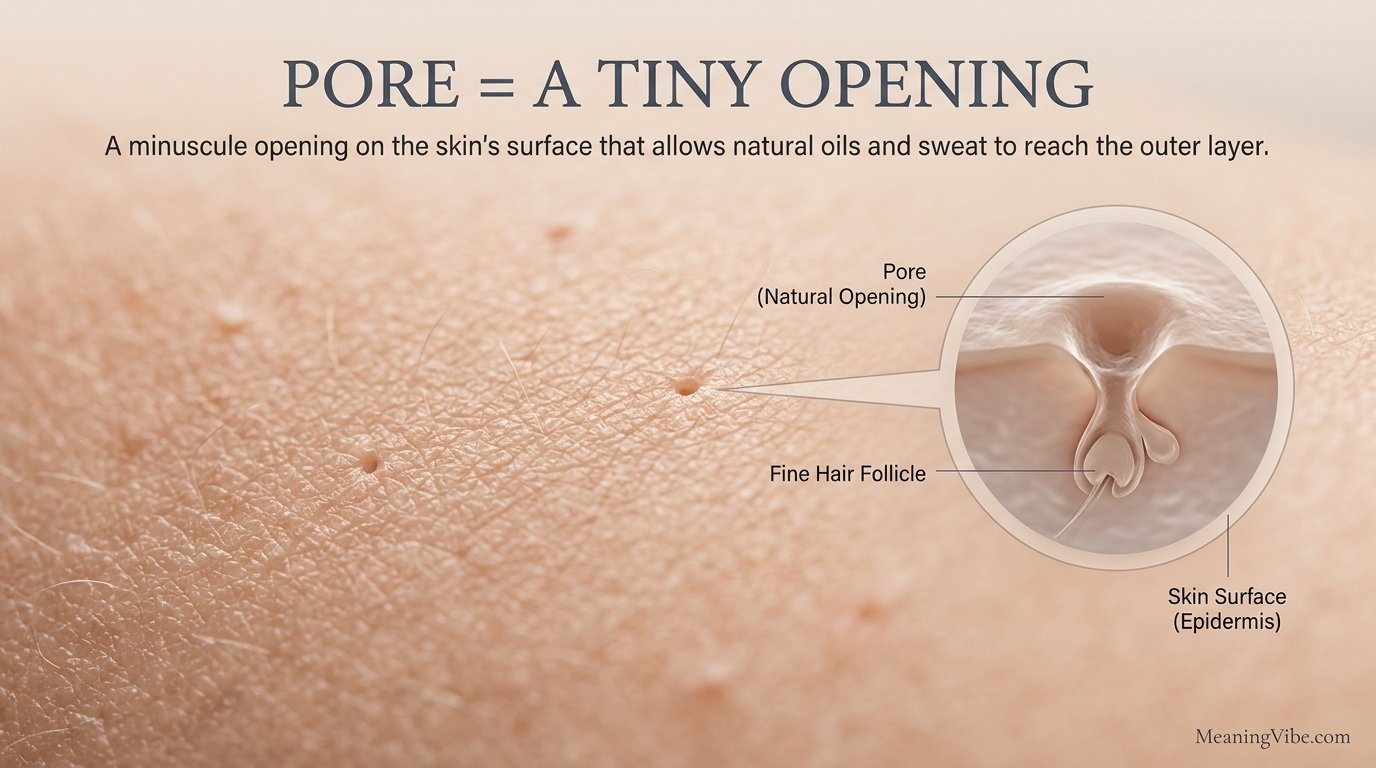
Anything arriving like a stream borrows the verb. Crowds pour into the stadium and pour out at the final whistle. Money pours into a hit product; investment pours in during a boom.
Complaints pour in after an outage; sunlight pours through a window; tears pour down a face.
The idioms belong to this family too. To pour your heart out is to let feeling stream to a listener. To pour cold water on a plan is to dampen it.
To pour oil on troubled waters is to calm a quarrel, and to pour scorn on an idea is to let contempt flow freely.
Pour also takes effort and resources as its stream: pour money into a startup, pour your energy into the project, pour yourself into your work.
And to pour it on means to lay something on thick, praise, effort, or speed, with the stream running at full width.
Now the warning promised at the glance table. These sentences are correct, and half taught writers break them by changing pour to pore, having learned that one of the pair is the smart spelling.
Pore never flows. If your sentence streams, pour is not the error; it is the answer, and an editor who changes it has failed the moving test.
Pour the Noun: A Generous Pour and a Concrete Pour
Pour also works as a noun, in limited trade phrases worth knowing so they are never mistaken for errors. In wine and spirits service, a pour is the amount served: a generous pour, a heavy pour, the house pour.
The bartender’s measure is a noun with a till behind it.
In construction, a concrete pour is both the event and the placed volume: the pour is scheduled for Tuesday, a two hundred yard pour. Schedules, contracts, and site reports use it daily, and it is as correct as the verb it came from.
These noun uses never compete with pore. A pour is an amount or an event of flowing; a pore is an opening.
The two nouns live in different worlds, which is why the catalogue below can be so short on noun errors and so long on verb ones.
The Over Collision: When Both Words Meet the Same Preposition
Here is the section the roundups skip. Line the phrases up and the pair’s real shape appears: the word over follows both verbs, and the spelling is decided by what stands on over’s far side.
|
Phrase |
Correct spelling |
What stands beyond over |
|---|---|---|
|
Study the report |
pore over the report |
A text receiving attention |
|
Work through the files |
pore through the files |
A volume receiving attention |
|
Dress the salad |
pour over the salad |
A surface receiving liquid |
|
Chill the drink |
pour over ice |
A surface receiving liquid |
|
Brew the coffee |
pour over the grounds |
Grounds receiving water |
|
The named method |
a pour-over |
The collision, hyphenated into a product |
BroadLearners’ pore over comparison sorts the same collision as mental versus physical, which is the moving test wearing classroom clothes. Mental traffic takes pore; physical traffic takes pour. Two vocabularies, one preposition, no exceptions in edited English.
Vocabulary.com’s pore over explainer lands the human version: you can pour liquid over anything you like, but that is not studying it, as anyone who has spilled coffee on their notes can testify.
The joke works because the two actions share a sound and nothing else.
Pour-Over Coffee and the Hyphen Rule
The collision even has a product. Pour-over coffee is brewed by pouring a slow stream of hot water over grounds in a filter, and the method’s name keeps the pour spelling because real water really flows.
As a compound noun and adjective it takes a hyphen: a pour-over, pour-over coffee, the pour-over method.
As a plain verb phrase it stays open: pour over the grounds slowly. The hyphen is therefore a diagnostic.
A menu printing pour over coffee as two open words in the method’s name has blurred the product into the studying error’s shape, and careful cafes fix it.
Merriam-Webster’s guide builds its emblem from this collision, and it deserves to be the page’s emblem too. You might drink a pour-over at a cafe while poring over some pages at your table.
One breath, both words, each forced by what is moving beside it.
The pair meets nightly in restaurants, which is why hospitality writing trips on it so often. A diner pores over the menu while the server pours the water, and the kitchen pours the sauce over the dish the diner chose.
One service can need both spellings a dozen times, and a menu or review that swaps them reads wrong to anyone who has been shown the test.
The Error Catalogue: Study Sessions Turned Into Spills
|
Error |
Correction |
Why it matters |
|---|---|---|
|
Poured over the documents |
Pored over the documents |
Documents take attention; the wrong verb floods them |
|
Pouring over the report |
Poring over the report |
The ing form is the error’s most common live shape |
|
Clogged pours (beauty copy) |
Clogged pores |
Skin openings are the noun pore |
|
Pore the milk into the bowl |
Pour the milk into the bowl |
Liquids flow; pore cannot carry them |
|
Crowds pored into the hall |
Crowds poured into the hall |
Figurative flow is pour; the overcorrection in action |
|
Pour over coffee (menu, method name) |
Pour-over coffee |
The method’s name is a hyphenated compound |
|
Pore your heart out |
Pour your heart out |
The idiom streams feeling; it does not study it |
One pattern organizes the catalogue: every error swaps the traffic. Attention gets flooded, liquids get studied, crowds get examined, skin gets spilled on. If a sentence feels faintly absurd when you picture it literally, you have found the swap.
The second pattern is social. This error is not a beginner’s error; it appears in professional drafts, published books, and, in the pair’s most famous instance, in a public post about writing itself.
The next section tells that story in the neutral form it deserves.
The Case Everyone Remembers
In July 2018, a post on social media boasting about its author’s writing ability observed that the press likes to pour over his posts looking for mistakes. The word the sentence needed was pore, and the sentence’s subject made the slip impossible to ignore.
Merriam-Webster replied publicly with the three definitions in their driest form: pore over, to read or study very carefully; pour over, to make expensive coffee; and, for the set’s third sound, a joke about comb overs.
News outlets documented the exchange, and the original post was corrected to pore.
The case belongs in this article for one reason: it proves the error is about familiarity, not intelligence. A rare verb hiding inside a common phrase will trip any writer who has never been shown the verb.
Being shown it once, with the moving test attached, is the whole cure.
The Third Sound: Poor, Sorted Once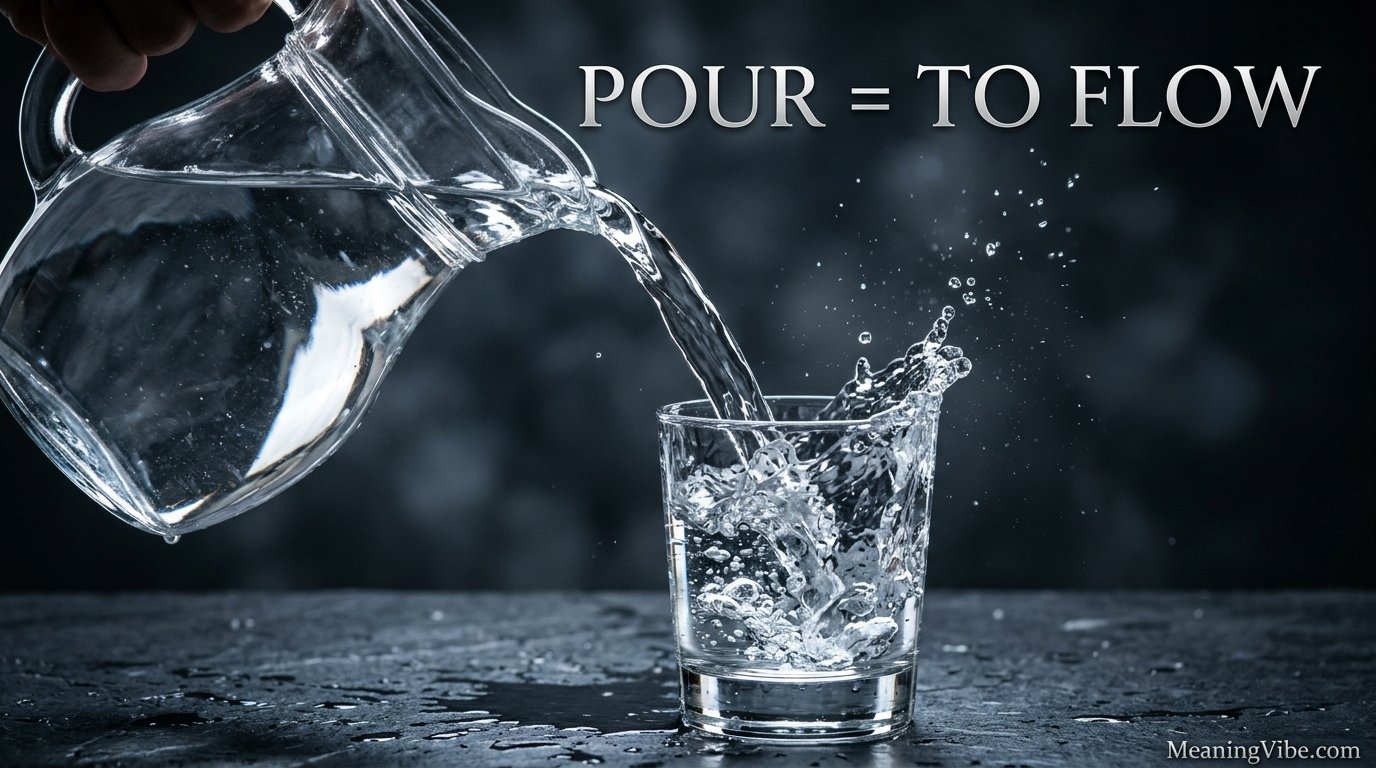
For many American speakers, a third word shares the sound: poor. It needs one paragraph and no more. Poor is an adjective: having little money, deserving pity, or low in quality (a poor excuse, a poor connection).
Poor never flows and never studies, and it has no verb life in this set. It also serves in the collective phrase the poor, people as a group, and even there it borrows neither of the other spellings.
It enters the pair’s story only because dictionaries sort the trio together, as Merriam-Webster’s usage guide to pore over and pour over does, and because listeners hear one sound where writers must produce three spellings. Sorted once, it can be left alone.
The Wider Family of Pairs at MeaningVibe
This pair belongs to a working cluster at MeaningVibe, and the cluster runs on the same discipline: one deciding question per pair.
Pairs like complement vs compliment, discrete vs discreet, elicit vs illicit, cite vs site vs sight, precede vs proceed, and moral vs morale each turn on a single test, the way this pair turns on what is moving.
The sound pairs like imply vs infer and the spelling pairs like envelop vs envelope and stationary vs stationery live in the same drafts and yield to the same habit: ask the deciding question before you type.
Worked Examples and a Ten Sentence Practice Set
The collision, in one sentence. She poured herself a coffee, sat down with the pour-over menu still in her hand, and pored over the audit report until the cafe lights dimmed. Three forms of the pair, each one forced by its traffic.
Ten sentences. Choose pore, pour, or the hyphenated form.
1. She ___ over the contract for an hour before signing.
2. ___ the dressing over the salad just before serving.
3. He ordered a ___ coffee and opened his notebook.
4. The skin’s ___ release sweat and oil to the surface.
5. Fans ___ into the stadium as the gates opened.
6. It ___ all night, and the gutters overflowed.
7. Detectives ___ over the evidence for the third time.
8. ___ off the excess fat and return the pan to the heat.
9. Clogged ___ are behind many breakouts.
10. She ___ her heart out to her oldest friend.
Answer key. 1 pored (attention over a text). 2 Pour (liquid over a surface). 3 pour-over (the method’s hyphenated name). 4 pores (the openings). 5 poured (a crowd flowing). 6 poured (rain, the weather sense).
7 pored (evidence receives attention). 8 Pour (draining a liquid). 9 pores (the noun, in beauty vocabulary). 10 poured (feeling streaming, the idiom).
Score the set by its traps. Sentence 3 is the hyphen diagnostic. Sentence 5 is the overcorrection trap in reverse: the crowd must pour, and changing it would be the error. The rest are pure moving test work.
Frequently Asked Questions
What is the difference between pore and pour?
What is moving. Pore the verb means attention moving closely across something (pore over a report); pore the noun is a tiny opening (a skin pore). Pour means something flows like liquid: coffee, rain, crowds, money. Attention or openings take pore; flows take pour.
What does pore mean?
Two entries sharing a spelling. As a noun: a tiny opening in a surface, especially skin or a leaf, from Greek poros, a passage. As a verb: to gaze intently, read or study attentively (usually with over), or reflect steadily. The verb’s origin is uncertain.
What does pour mean?
To cause liquid to flow in a stream from a container, or to flow in a stream yourself: pour the milk, the rain poured. Extended to anything moving like liquid: crowds, money, complaints. It also has limited noun uses: a generous pour of wine, a concrete pour.
Is it pore over or pour over for reading?
Pore over, always, for reading. Merriam-Webster defines pore as to read or study attentively, usually with over, and Merriam-Webster’s usage guide to pore over and pour over names the pour version the commonest mistake here. Every tense stays pore: pored over, poring over.
Why do people write pour over for studying?
Because it feels logical, which makes it a textbook eggcorn: an unfamiliar phrase rebuilt from familiar parts. Writers picture knowledge flowing over the page, and pour is the word they know, while the verb pore is rare outside this phrase. Exposure to pore’s real meaning fixes it.
What is pour-over coffee?
A brewing method, and the pair’s best anchor. Hot water is poured in a slow stream over grounds in a filter, so pour is right because real liquid moves. As a compound it is hyphenated: pour-over coffee, a pour-over. Merriam-Webster lets you drink one while poring over pages.
How can pore over and pour-over appear in one correct sentence?
Easily: She drank a pour-over coffee while poring over the report. The coffee takes pour because water flowed over grounds. The report takes pore because her attention moved over pages. Same sound, opposite spellings, decided entirely by what is moving.
What does pore over mean exactly?
Merriam-Webster gives the verb three shades: to gaze intently, to read or study attentively (usually with over), and to reflect or meditate steadily. The core is sustained close attention: pore over a map, the fine print, the evidence. The eyes stay down; the mind stays on the material.
What is pore through?
The same verb with a different preposition: to pore through documents or archives is to work through them with close attention, page by page. Through stresses the volume covered; over stresses the surface examined. Both take pore, never pour, when attention is what moves.
Is pour over ever correct?
Yes, whenever real liquid flows over something: pour the dressing over the salad, pour water over the ice. It is only wrong as a replacement for pore over in the reading sense. A surface receiving liquid takes pour; a text receiving attention takes pore.
Poured over the documents: what is wrong with it?
The verb is wrong. Documents receive attention, not liquid, so the sentence needs pored over the documents. Poured over them means someone tipped liquid across the pages, which is why usage guides use this exact contrast as the warning example. One letter turns study into a spill.
What is a skin pore?
A tiny opening in the skin, the outlet of a sweat gland or hair follicle, where sweat and sebum reach the surface. The noun comes from Greek poros, a passage, which is exactly what a pore is. Beauty vocabulary (clogged pores, pore size) uses this noun throughout.
Are pores only on skin?
No. A pore is any small opening or passage in a surface or material. Leaves have pores for gas exchange; sponges are full of them; rock and soil have pore space, the gaps holding water and air, measured as porosity in geology and engineering.
Clogged pours or clogged pores for skin?
Clogged pores. Skin features are the noun pore, the tiny openings; pour is the flowing verb and has no place in skin vocabulary. The swap is common in beauty drafts because the words sound identical, and it reads as a spill on the face.
What is the famous public example of the pour over mistake?
In July 2018, a widely reported post boasting about writing ability said the press likes to pour over my tweets; the word needed was pore. Merriam-Webster replied publicly with the definitions, and the post was corrected. It remains the pair’s best known real case.
How do you remember pore vs pour?
Ask what is moving. Attention across pages: pore. Liquid or anything flowing: pour. An opening: pore. Letter hooks help: pour has the u, like cup, and liquids live in cups; pore matches the ore of explore, and poring is exploring a text. The coffee anchor seals it.
Do pore and pour sound exactly the same?
Yes, in most American accents they are full homophones, and for many speakers poor joins them as a third. That is why spellcheck never catches the swap: both words are real and correctly spelled. Sound cannot arbitrate this pair; only the moving test can.
Where does the noun pore come from?
From Greek poros, a passage or way through, through Latin porus and Old French into Middle English. The family keeps the idea: porous, porosity, and pore space all carry the passage sense. A pore is a way through a surface, in skin, leaf, sponge, or stone.
Where does the verb pore come from?
Nobody knows for certain, and the honest answer is part of the lesson. Dictionaries mark the verb pore’s origin as unknown or uncertain; it appears in Middle English centuries ago, possibly connected with peering. Pages printing a confident single source for it are guessing.
Is pour a noun?
In limited, mostly trade uses, yes: a generous pour (the amount of wine served), a heavy pour, and in construction a concrete pour, the event and the placed volume. Everyday English treats pour as a verb. Its noun uses never compete with pore’s openings.
What does it is pouring mean?
Raining heavily: it poured all night, a pouring rain, a downpour. Rain is pour’s most common weather sense, liquid falling in a stream from the sky. The noun downpour names a sudden heavy fall. None of these takes pore; weather writing is pour territory.
Can pour describe crowds and money?
Yes, and the figurative family is large: crowds pour into stadiums, fans pour out, money pours into a project, complaints pour in, sunlight pours through a window. Anything arriving in a continuous stream borrows pour. Writers sometimes overcorrect these to pore; the moving test protects both directions.
Pour your heart out: which spelling, and why?
Pour. The idiom pictures feelings flowing out in a stream to a listener: she poured her heart out to her sister. It belongs to the figurative flow family, with tears and words moving like liquid. Pore your heart out would be a study session, not a confession.
Pour cold water on an idea: pour or pore?
Pour. To pour cold water on a plan is to dampen it, an idiom built on the liquid image. Its relatives behave the same: pour oil on troubled waters, pour scorn on. Idioms of flowing take pour; idioms of studying take pore; there is no overlap.
What does it never rains but it pours mean?
That troubles arrive in floods rather than singly: when one thing goes wrong, everything does. The proverb uses pour in its rain sense, troubles falling like a downpour. Its spelling (pours, never pores) confirms the weather family, and learners search it often.
Pored or poured for studied all night?
Pored. She pored over her notes all night. The past tense of the attention verb is pored, spelled like its present. Poured would put liquid on the notes. The past forms are a top confusion point because pored and poured sound identical and both look plausible.
Poring or pouring over the report?
Poring. He is poring over the report: attention at work, pore plus ing. Pouring over the report describes coffee meeting paperwork. Editors flag the pouring version constantly in drafts about research, audits, and reviews, which is why the ing form earns its own answer.
What are the past tenses of pore and pour?
Both are regular: pore, pored, pored; pour, poured, poured. The forms sound exactly alike, so the error is a writing problem, not a speaking one. In edited prose the spelling carries the whole meaning: pored over the files (studied) against poured over the files (a spill).
Can pore be used without over?
Yes, though it usually keeps company with over or through. Alone, pore means to gaze intently or reflect steadily. In practice writers meet pore almost entirely inside pore over and pore through, which is exactly why the verb stays unfamiliar and the error survives.
Pour over ice: which word, and why?
Pour, because liquid moves over a solid surface: pour the drink over ice, pour water over the cubes. Ice is not read, and no attention is involved. It is the cleanest literal example of pour over being correct, the control case against pore over the report.
Pour over the salad or pore over the salad?
Pour over the salad, when dressing is being added: pour the vinaigrette over the salad. Nobody studies a salad, unless a food critic is poring over the menu instead. Recipes are pour territory; menus being decided over are pore territory.
What are porosity and pore space?
The noun family in science. Pore space is the network of tiny gaps inside rock, soil, or material; porosity measures how much of the volume those gaps form. The terms decide whether aquifers hold water and filters work. Both descend from Greek poros.
Do plants have pores?
Yes. Leaves carry tiny pores, closely related to the openings called stomata, letting gases move in and out for photosynthesis and water vapor escape. Botany uses pore for such openings generally. It is the noun sense again: a passage through a surface, on a leaf instead of skin.
Pore over the menu or pour over the menu?
Pore over the menu, when a diner studies it closely to decide: she pored over the menu for ten minutes. The menu is a text receiving attention. Pour enters the restaurant only when liquid does: the server pours water, the cook pours sauce.
How is the coffee word spelled: pour over or pour-over?
With a hyphen as a compound: pour-over coffee, a pour-over, the pour-over method. As a plain verb phrase it stays open: pour over the grounds slowly. The hyphen marks the method’s name, and its absence in the studying error is one more signal the writer meant pore.
What is a downpour?
A sudden, heavy fall of rain: a downpour soaked the parade. It is a compound built on pour, the rain sense, liquid arriving fast and in volume. Downpore is not a word; the weather family is pour’s, entirely.
Does pour only move liquids?
No. Pour handles granular and thick flows too: pour the sand, pour the grain, pour the batter, pour concrete. The test is flow, not wetness: anything moving in a continuous stream from a container pours. A liquids only rule makes writers doubt correct sentences about batter and sand.
What does pour off mean?
To drain or decant the liquid part away: pour off the fat, pour off the excess water. It is pour plus a direction particle, like pour in, pour out, pour into. These phrasal uses all keep the flow sense, and none ever takes pore.
She pored or poured over the spreadsheet for hours: which is right?
Pored. A spreadsheet is data receiving sustained attention, the same family as documents, evidence, and archives: analysts pore over spreadsheets, lawyers pore over contracts. Hours of attention is the tell; nothing liquid spends hours flowing over a spreadsheet on purpose.
Poor, pore, pour: how do the three sort?
By job. Poor is an adjective: having little money, deserving pity, or low in quality (a poor excuse). Pore is the opening noun and the attention verb. Pour is the flow verb. Poor never verbs and never flows; it enters only because the three collide in sound.
How do you use pore and pour in one sentence?
With the coffee scene: He sipped his pour-over while poring over the morning paper. Or the editor’s version: She poured herself a coffee and pored over the manuscript. One sentence holding both words is the pair’s graduation test; each spelling is forced by what moves beside it.
Pore vs pour: which mistakes matter most?
Three, in order. Poured over the documents and its ing twin, the studying error, found in professional and even presidential writing. Clogged pours in beauty copy, turning skin into a spill. And the missing hyphen in pour-over coffee writing, blurring the method’s name into the error’s shape.
Conclusion
Pore vs pour resolves with a single question asked at the moment of typing: what is moving? Attention moving across pages is pore. Anything flowing, from coffee to crowds, is pour. A tiny opening that lets things through is pore, the noun that never moves at all.
Keep the tools in order: the moving test for meaning, the object check after over, the hyphen for the coffee method, and the warning that figurative pours are correct and must not be corrected away.
With those four, the pair stops being a spelling lottery. It becomes a traffic report you can read at a glance.