

Ever typed “I’m feening for pizza” and then paused, wondering if that even looks right? You are not alone. This is one of the most searched spelling mix ups in casual English, and it trips up writers, students, and even native speakers on social media every single day.
The confusion is understandable. Both words sound identical when spoken out loud, and both show up constantly in song lyrics, texts, and captions. But only one of them has real grammatical backing, and using the wrong version in formal writing can quietly hurt your credibility.
This guide breaks down the correct spelling, where the word came from, how it is used across different regions, and the mistakes people make most often. By the end, you will never second guess this word again.
Fiending or Feening – Quick Answer
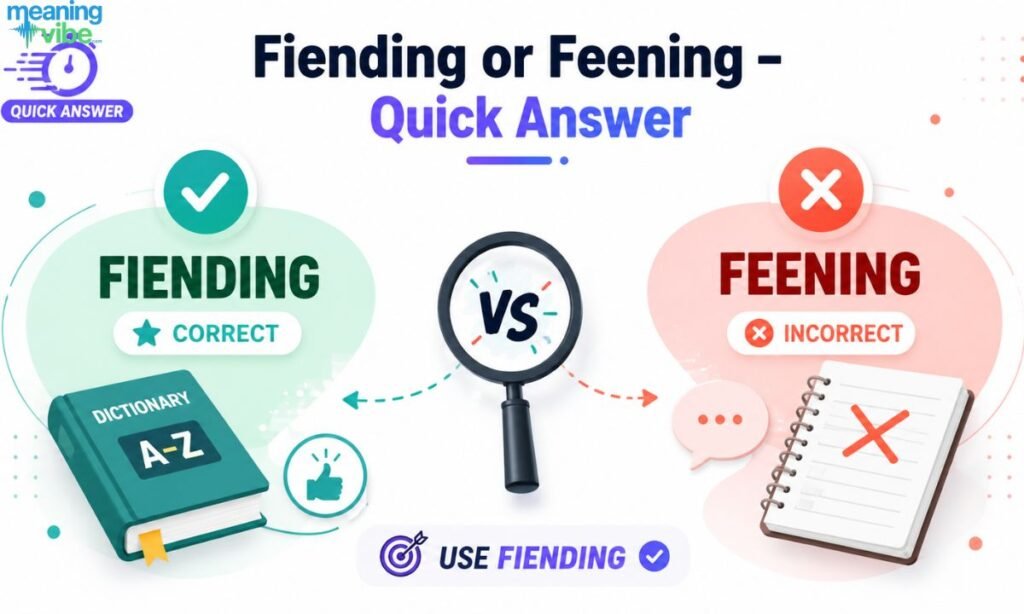
Fiending is the standard, dictionary recognized spelling. Feening is a slang variation based purely on how the word sounds when spoken quickly.
- Fiending comes directly from the noun fiend, plus the suffix ing.
- Feening is a phonetic respelling that became popular through music and internet culture.
- Both describe the same idea: an intense, almost uncontrollable craving for something.
- Only fiending is considered acceptable in professional or academic writing.
If you are writing an email, a blog post, an essay, or anything meant for a broad audience, fiending is always the safer choice.
Fiending pronunciation
Fiending is pronounced FEEN ding. The first syllable rhymes with the word “seen,” and the stress falls on that first syllable.
Because the word is said quickly in casual speech, the D sound often gets softened or dropped entirely, which is exactly why so many people started writing it as feening instead.
Fiending for something
When someone says they are fiending for something, they mean they want it badly, almost to the point of obsession. It is commonly used with food, entertainment, and everyday desires, not just serious cravings.
Examples of casual, everyday use include:
- I have been fiending for a burger all afternoon.
- She was fiending for the new season of her favorite show.
- He kept fiending for a coffee after his nap.
In these cases, the word is lighthearted and does not carry any negative weight. It simply expresses a strong want.
The Origin of Fiending or Feening
To understand why fiending is correct, it helps to look at where the word actually comes from.
The root word is fiend, which traces back to Old English fēond, originally meaning enemy or evil spirit. Over centuries, the meaning shifted. Instead of referring only to something demonic, fiend began describing a person who is excessively devoted to a habit or activity.
Adding the standard ing ending to fiend naturally produces fiending, following the same grammar rule used in thousands of other English verbs like feeling from feel or seeding from seed.
Feening, on the other hand, has no direct root word of its own. It exists only because people started spelling the word the way it sounds rather than the way it is built. Hip hop and rap lyrics played a major role in spreading feening as a written form, but that popularity never translated into formal recognition.
So while feening is widely understood, it remains a spoken shortcut rather than a properly constructed word.
Also Read This: Dammit vs. Damnit: What’s the Difference and Which Is Right? (2026)
British English vs American English Spelling
Unlike words such as color and colour, there is no regional split for this particular word.
| Region | Preferred Spelling | Notes |
| American English | Fiending | Standard in all writing contexts |
| British English | Fiending | No alternate spelling exists |
| Slang or Informal English | Feening | Used casually worldwide, especially online |
Both American and British dictionaries treat fiending as the correct form. Feening does not appear as an official entry in major standard dictionaries, though some slang and crowd sourced dictionaries do track it as a known variant.
Which Spelling Should You Use?
The answer depends entirely on context. Think of it less as right versus wrong and more as formal versus informal.
Use fiending when:
- Writing blog posts, articles, or website content
- Sending professional emails
- Completing school or academic assignments
- Publishing anything meant to rank well on Google
- Writing for a general or unfamiliar audience
Use feening when:
- Texting friends casually
- Writing song lyrics or creative dialogue
- Posting on social media in a relaxed tone
- Trying to capture how someone actually speaks
A simple rule to remember: if an editor would read it, use fiending. If a friend would text it, feening is fine.
Common Mistakes with Fiending or Feening
Even experienced writers slip up here. Below are the most frequent errors people make.
- Assuming feening is just a regional spelling difference, similar to British versus American English. It is not; it is a slang form, not a dialect variation.
- Using feening in formal essays or professional documents, which can come across as careless or unpolished.
- Believing the two words have different meanings. They do not. Both describe the same intense craving or desire.
- Autocorrect confusion, where phones or writing tools flag fiending as a typo simply because feening feels more familiar from everyday texting.
- Spelling it as “fiening,” dropping the D entirely, which is technically incorrect either way.
Avoiding these mistakes is simple once you remember that fiending is built from a real root word, while feening is not.
Fiending or Feening in Everyday Examples
Seeing the word in context makes the difference easier to remember. Here are natural examples across different settings.
Casual conversation “I’m feening for tacos right now, not going to lie.”
Formal writing “After skipping breakfast, she found herself fiending for something sweet by midmorning.”
Song lyrics or creative writing “Feening for your voice late at night, can’t shake this feeling.”
Workplace or academic tone “The team had been fiending for a break after weeks of tight deadlines.”
Notice how the meaning stays identical in every example. Only the tone and setting change which spelling feels natural.
Fiending or Feening Google Trends and Usage Data
Search interest for both spellings has grown steadily over the past several years, largely driven by music, streaming platforms, and social media trends. Fiending consistently shows higher overall search volume because it is the spelling used in dictionaries, educational resources, and most published writing.
Feening tends to spike specifically around new song releases, viral clips, and slang focused content, which explains why it feels more common online even though it is technically the less correct form. This pattern is common with slang terms: the informal spelling often dominates casual platforms while the standard spelling dominates search intent for definitions and grammar guidance.
For content creators and writers, this data point matters. Ranking for grammar related searches almost always requires using fiending, since that is what dictionaries, style guides, and educational sites recognize.
Comparison Table: Fiending vs Feening
| Feature | Fiending | Feening |
| Dictionary status | Recognized standard spelling | Slang, not standard |
| Root word | Fiend | No direct root word |
| Used in formal writing | Yes | No |
| Common in music and slang | Occasionally | Frequently |
| British English acceptance | Yes | No |
| American English acceptance | Yes | Informally only |
| Best for SEO content | Yes | No |
| Meaning | Intense craving or desire | Same as fiending |
This table sums up the entire debate in one glance: same meaning, different level of formality.
Conclusion
The debate between fiending or feening really comes down to speech versus spelling. Fiending is the version with real grammatical roots, dictionary backing, and universal acceptance across American and British English.
Feening is simply a phonetic shortcut that became popular through music, texting, and internet culture.If you are writing anything formal, professional, or meant for a wide audience, stick with fiending.
Save feening for casual texts, lyrics, or moments when you want your writing to sound exactly like natural speech. Once you understand the difference, you will never have to guess again.