

If you’ve ever scrolled through a Snapchat message or a TikTok comment and stopped at the word “lowk”, you’re not alone. This small but expressive piece of internet slang has quietly taken over digital conversations — and knowing what it means can save you from a lot of confusion. This guide breaks down the full lowk meaning in text, where it came from, how people use it across platforms, and when you should (or absolutely shouldn’t) type it.
What Does Lowk Mean in Text?
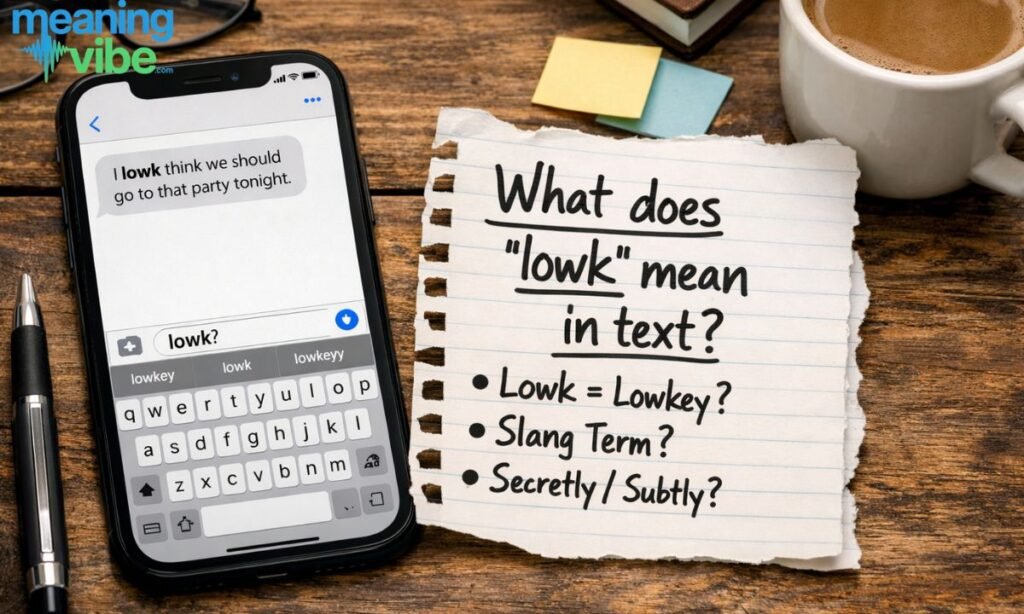
Lowk is an informal shorthand for “low-key.” In everyday texting and online communication, it means something is subtle, understated, or slightly true — but the speaker doesn’t want to make a big deal out of it.
When someone says “I’m lowk excited about the trip,” they’re admitting they feel excited, but they’re keeping that feeling quiet, casual, or soft. It functions like a volume dial — lowering the emotional intensity of what’s being said.
Quick Definition: Lowk = Low-key = Subtly, secretly, or quietly feeling/thinking something.
It can work as both an adverb (“I lowk loved that movie”) and as a standalone expression to suggest discretion or modesty. The meaning shifts slightly based on tone and context, but the core idea stays the same: expressing something without going over the top about it.
Background & History: Where Did “Lowk” Come From?
The origin of lowk comes from the popular slang phrase “low key,” which has been used in English since the early 2000s. Originally part of African American Vernacular English (AAVE), “low key” entered mainstream usage through music, social media, and pop culture.
Around 2015, the abbreviated version “lowk” emerged on social media platforms. Twitter’s character limits and the need for faster typing pushed users to shorten phrases, and lowk meaning on social media spread rapidly through meme culture and influencer adoption.
According to language experts, “low-key” functions as a transitional phrase between two thoughts — it signals “this isn’t super serious, but here are my thoughts.” It’s meant to downplay the severity of a comment.
What started as spoken slang in urban communities became universal internet language within a few years. By the early 2020s, platforms like TikTok, Snapchat, and Instagram had fully absorbed “lowk” into their everyday vocabulary, particularly among Gen Z users who prefer brevity and casual expression.
What Does Lowk Mean in Texting? (With Real Examples)
In texting specifically, “lowk” is used to soften statements, share opinions gently, or admit feelings without sounding too intense. Here are some realistic examples you’d actually see in chats:
| Message | What It Really Means |
| “I lowk miss you” | I miss you, but I don’t want to sound too emotional about it |
| “That movie was lowk good” | It was better than I expected, but I’m not going to hype it |
| “I’m lowk tired today” | I’m pretty tired, but keeping it casual |
| “Lowk thinking about going tonight” | I’m considering it but haven’t fully committed |
| “I lowk like him” | I have feelings, but I’m not ready to fully admit them |
| “This food is lowk fire 🔥” | It’s surprisingly great, shared in a relaxed, cool way |
In messaging apps and social media platforms, lowk often carries a conversational tone. Users employ it to express hidden opinions, emphasize feelings subtly, and highlight relatable content.
What Does Lowk Mean on Snap?
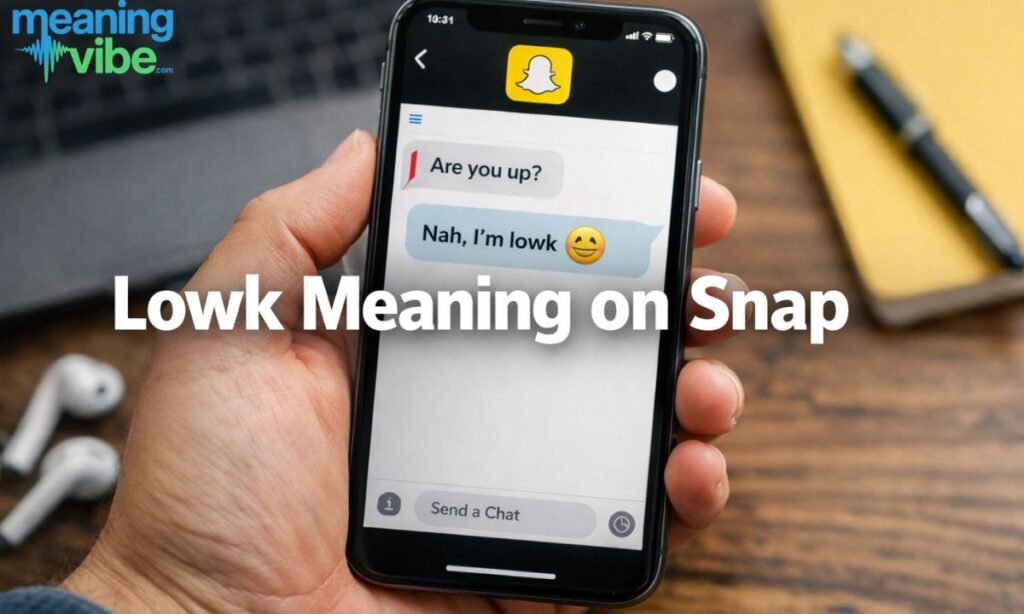
On Snapchat, lowk fits perfectly because the platform is built around casual, fleeting communication. Snaps are impermanent by nature — and lowk matches that energy. You’ll often see it in Snap streaks, story replies, or quick DMs.
For example:
- “lowk wanna hang out this weekend 👀” — a soft invitation without pressure
- “lowk your story was so funny 😂” — a casual compliment that doesn’t feel forced
- “we’re lowk overdue for a chat” — a low-pressure way to reconnect
On Snap, the term also pairs naturally with emojis like 😅, 👀, or 🤫, adding a playful or slightly secretive layer to the message. It’s the digital equivalent of a raised eyebrow — not quite owning what you said, but definitely meaning it.
Lowk Urban Dictionary Definition
According to Urban Dictionary, “lowkey” (and by extension “lowk”) is used to describe a speaker’s thoughts, feelings, and desires, and means either moderately, of low emotional intensity, or secretly. The opposite of lowkey is highkey.
Urban Dictionary users also describe it as a way of keeping something quiet — like telling a friend about a secret you don’t want publicized. The platform’s community-driven definitions reflect how the word has evolved over time: from its AAVE roots to mainstream Gen Z slang used across every corner of the internet.
A commonly cited example: “I am lowkey in love with that song” — meaning the speaker really loves it but is playing it cool.
Usage in Various Contexts
Casual Conversation & Group Chats
This is where lowk thrives. It’s the perfect word when you want to be honest without being dramatic. In group chats with friends, it keeps the vibe relaxed and avoids awkward over-sharing.
Social Media Captions
On Instagram and TikTok, creators use “lowk” in captions to sound relatable and grounded. “Lowk proud of myself for this one 🙌” feels more humble and real than “I am SO PROUD of myself.”
Dating Apps & Flirting
Dating apps transformed lowk into strategic language. On Tinder, “Lowk looking for something real” signals interest without desperation. Bumble profiles use it to seem approachable. Saying “I lowk think you’re cute” is lighter and less intimidating than a direct compliment — making it popular in early-stage digital flirting.
Gaming & Online Communities
In Discord servers and gaming lobbies, “lowk” appears constantly in match recaps and banter. “That was lowk my fault” admits a mistake without turning it into a dramatic moment.
Common Misconceptions & Clarifications
Several myths surround this word. Let’s clear them up:
- “Lowk means low knowledge” — False. It has nothing to do with intelligence.
- “It’s just a typo” — No. It’s intentional internet slang.
- “It means something secretive or suspicious” — Not exactly. While it can imply keeping something quiet, the tone is usually casual and positive, not deceptive.
- “It’s the same as LOL or LMK” — Completely different meanings. Lowk is sometimes confused with similar-sounding terms like “LOL” or “LMK,” but the meanings are entirely different.
- “It always means romantic feelings” — Not true. It can be used in completely platonic or even humorous contexts.
The key to understanding lowk is context. The same word can signal mild excitement, soft affection, or ironic humor depending on who’s typing it and what surrounds it.
Similar Terms & Alternatives
If “lowk” doesn’t feel right for a given message, these related terms carry similar energy:
| Term | Meaning | Example |
| Low-key | Full form of lowk; same meaning | “I’m low-key obsessed with this show” |
| Highkey / Highk | The opposite — obvious, intense, unapologetic | “I highkey love this song” |
| Kinda | Moderate intensity, softer agreement | “I’m kinda feeling that too” |
| Ngl (not gonna lie) | Used for subtle honesty | “Ngl, lowk forgot about the meeting” |
| Tbh (to be honest) | Often paired with lowk for mild confessions | “Tbh I lowk prefer staying in” |
| No cap | Emphasizes truth or sincerity | “Lowk the best meal I’ve had, no cap” |
Each alternative varies in tone, but all add nuance to modern digital speech.
How to Respond to Lowk
Received a message with “lowk” in it? The best approach is to match the casual, understated energy. Here’s a simple guide:
- If it’s a soft compliment (“I lowk think you’re talented”) → respond warmly but casually: “Aww stop it 😂 lowk appreciate that”
- If it’s a subtle invitation (“lowk down to hang out”) → match the energy: “lowk same, let’s make it happen”
- If it’s a confession (“I lowk still have feelings”) → acknowledge it gently without over-dramatizing: “Lowk I feel you on that 😅”
- If it’s an opinion (“That was lowk the best episode”) → agree or expand: “Right?! Lowk better than last season”
The golden rule: don’t respond with formal language to a lowk message. Keep it light, keep it real.
Regional or Cultural Differences
While lowk is widely recognized in English-speaking countries, usage may vary slightly. In the United States and UK, it’s common in casual messaging, social media, and texting among younger demographics. In other regions, it’s less frequent but increasingly adopted in global digital culture due to social media influence.
Generationally, Gen Z integrates lowk automatically, Millennials use it consciously, and Gen X tries it occasionally. Urban areas and coastal cities tend to lead adoption of slang like this before it spreads to broader communities. That said, thanks to TikTok’s global reach, “lowk” is now understood by young users far beyond its AAVE and American origins.
Lowk vs. Similar Terms: A Comparison
| Term | Tone | Intensity | Best Used When |
| Lowk | Subtle, understated | Low | Softening a feeling or opinion |
| Highkey | Open, emphatic | High | Being fully transparent or excited |
| Kinda | Moderate, vague | Medium | Expressing partial agreement |
| Tbh | Honest, direct | Medium | Sharing real opinions casually |
| Ngl | Candid, slightly vulnerable | Medium | Admitting something unexpected |
The biggest contrast is between lowk and highkey. Where lowk whispers a feeling, highkey announces it. Both are useful tools in digital communication — the choice depends entirely on how much you want to own what you’re saying.
Usage in Online Communities & Dating Apps
In online communities, forums, and dating platforms, lowk often conveys restrained emotions or opinions. Users leverage it to express mild excitement or interest without appearing overly eager.
On Reddit, you’ll find it in casual comment threads. On Discord, it pops up in server chats and game lobbies. On dating apps, it’s a social softener that makes the stakes feel lower — which, paradoxically, often makes people more willing to be honest.
A Tinder bio saying “lowk looking for something real” reads as self-aware and genuine rather than desperate. A Hinge message like “I lowk laughed out loud at your answer” is a compliment that doesn’t feel like it’s trying too hard. That’s the subtle power of this word in digital dating culture.
Hidden or Offensive Meanings
For the most part, lowk carries no offensive meaning. It’s casual, friendly, and widely accepted across most age groups and online spaces. However, a few situations are worth noting:
- When paired with negative statements (“I lowk hate this”), it softens but doesn’t eliminate the negativity — the listener still registers the sentiment.
- Overusing it can make you seem non-committal or emotionally unavailable in serious conversations.
- In some contexts, using “lowk” to downplay something serious could come across as dismissive.
The word itself isn’t problematic. Context and delivery, as always, matter most.
Suitability for Professional Communication
Short answer: no. Lowk belongs in casual spaces — not the workplace.
Lowk is primarily informal and not recommended for professional or formal correspondence. In work emails, reports, or official communication, using full expressions like “to be discreet” or “subtly” is preferable. Reserve lowk for casual messaging, personal chats, or social media.
Sending your manager “I lowk think the deadline is a bit tight” could undermine your professionalism. In formal writing, be direct: “I’d like to flag that the current timeline may be challenging.” Save lowk for the after-work group chat, not the quarterly report.
Frequently Asked Questions (FAQs)
Q: What does lowk mean in text?
It means “low-key” — subtly, quietly, or secretly feeling or expressing something.
Q: What does lowk mean in texting from a girl?
She’s being soft or subtle about a feeling — often mild affection, humor, or a quiet admission.
Q: What does lowk mean on Snap?
Same meaning — expressing something casually or quietly, often paired with playful emojis.
Q: Is lowk in the Urban Dictionary
Yes, it’s listed as slang for “low-key,” meaning secretly or subtly.
Q: Is lowk offensive?
No, it’s generally harmless casual slang used in friendly, playful conversations.
Q: Can I use lowk at work?
Not recommended — it’s too informal for professional emails or official communication.
Q: What’s the opposite of lowk?
“Highkey” (or “highk”) — meaning openly, obviously, or very much.
Q: Is lowk a real word?
It’s not in formal dictionaries, but it’s widely recognized and used internet slang.
Conclusion
Understanding lowk meaning in text is more than just decoding a shorthand — it’s about grasping the emotional texture of modern digital communication. This small word carries a lot of weight: it lets people be honest without being vulnerable, expressive without being intense, and relatable without trying too hard. Whether you spot it in a Snapchat message, a TikTok caption, a dating app conversation, or a group chat, you now know exactly what it means and how to respond. Use it in casual, informal settings, skip it in professional ones, and you’ll be fluent in one of the defining quirks of Gen Z digital language.